
Building Monitoring Surveys
Accurate Monitoring of Structural Movement
Get a Free Quote From Us Today!
We aim to get back to you in 24 hours.
At Building Monitoring Surveys, we specialise in comprehensive monitoring surveys that identify and measure structural movement. Our services focus on detecting settlement, displacement, deformation, and other changes affecting buildings over time.
We establish precise reference points and carry out repeat measurements to capture accurate data. Serving both the commercial and residential sectors, we ensure that all potential risks to structural integrity are thoroughly assessed.
Contact us today to arrange a consultation and secure the safety of your building.
Who Is Building Monitoring Surveys?
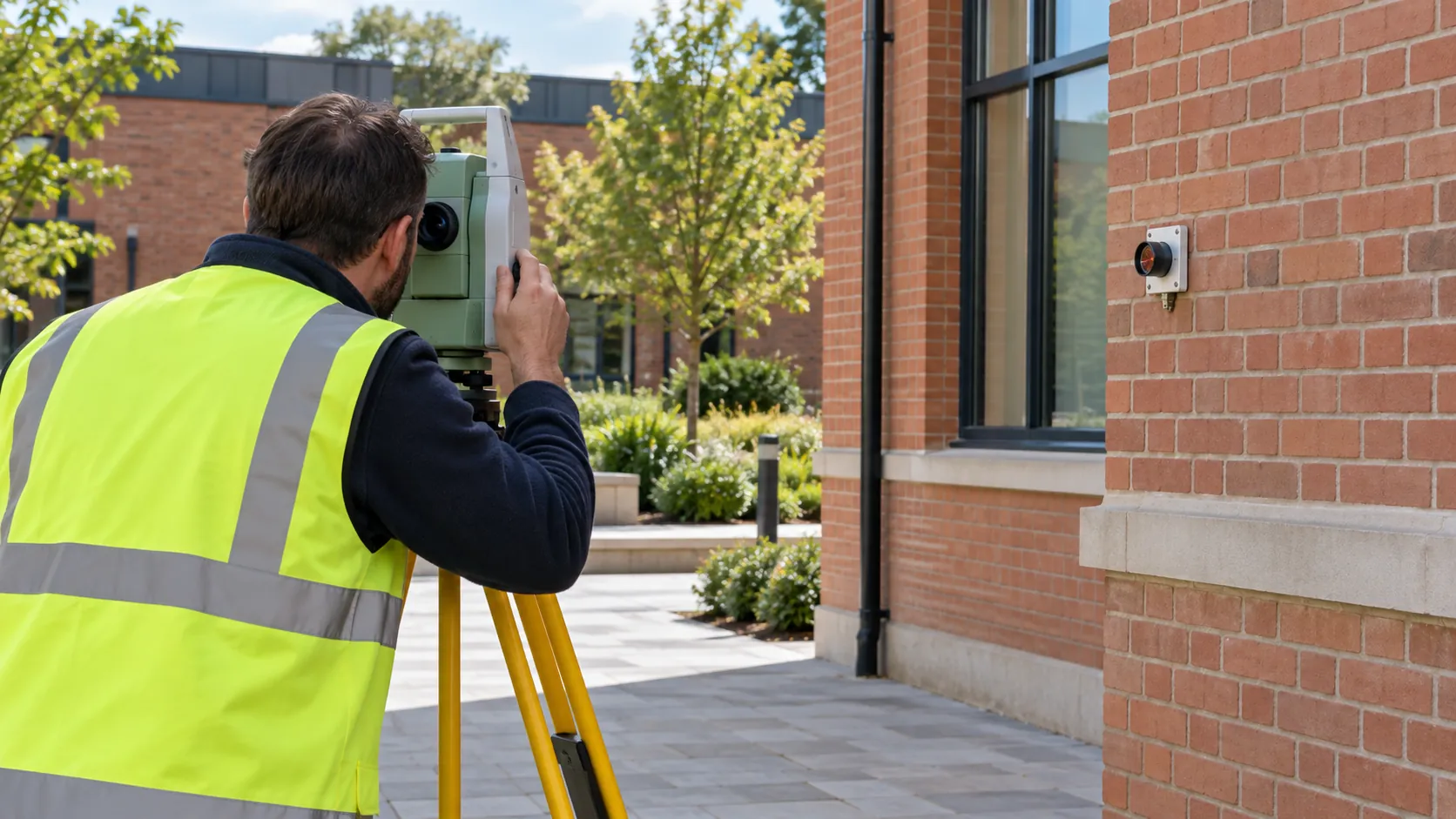
We are a dedicated team at Building Monitoring Surveys, committed to assessing the structural integrity of buildings and structures. Our expertise lies in measuring changes such as settlement and deformation by using advanced surveying techniques like precise levelling and total station monitoring.
We work with a wide range of building types, including historical landmarks, commercial properties, and residential buildings, using equipment like laser scanners and tilt sensors to provide comprehensive insights.
We follow rigourous standards like the British Standard BS ISO 4866 to ensure the highest accuracy in our measurements. Our work is crucial for identifying early signs of subsidence or structural shifts, enabling timely interventions to prevent significant damage.
We provide essential data that helps in maintaining the health and safety of various structures. Trust us to safeguard the longevity and stability of your property.
What Building Monitoring Surveys Services Does the company Building Monitoring Surveys Provide?
At Building Monitoring Surveys, we offer a range of services tailored to detect and measure structural changes, ensuring your buildings maintain safety and integrity.
- Structural Movement Surveys: Capturing precise data to monitor structural movement over time. We employ tools such as total stations and GPS devices to document any shifts, helping to prevent potential structural issues.
- Settlement Analysis: Identifying soil settlement that may affect a building’s stability. We assess factors like soil composition and moisture content, using techniques such as dynamic probing to deliver accurate insights on settlement risks.
- Displacement Tracking: Measuring horizontal and vertical shifts in buildings, particularly during construction or adjacent excavations. Our laser scanning technology aids in detecting even minute displacements, preventing potential damage.
- Deformation Monitoring: Tracking changes in the shape or dimensions of structures. We use 3D laser scanners and photogrammetry to identify deformation patterns that could compromise structural soundness, assisting in timely remedial actions.
Our services cater to a variety of clients, from construction companies to property developers, ensuring structural safety and compliance with industry standards.
When Is Structural Monitoring Needed?
Structural monitoring becomes essential when there are signs of movement or when construction activities are nearby. It’s often required during major landscaping, underpinning, and adjacent construction projects to ensure the safety of existing structures.
Monitoring is crucial when alterations, such as extensions or loft conversions, are planned, as these can affect the building’s load-bearing capacity.
Additionally, monitoring is recommended for older or historic buildings to track any natural wear or stress due to environmental changes. We use equipment like inclinometers, tilt beams, and vibration sensors to provide accurate data.
Our analysis follows standards such as BS ISO 4866 for vibration monitoring. Whether it’s for new construction or existing buildings, we offer comprehensive evaluations to identify potential risks and develop appropriate mitigation strategies.
Contact us to discuss how we can assist you with your structural monitoring needs.
Get a Free No Obligation Quotation Today
How Does Building Monitoring Surveys Work?
We follow a systematic process to guarantee reliable results in monitoring the structural integrity and performance of buildings.
- Initial Consultation: We meet with clients to understand the specific needs of the project, including the type of structure, environmental conditions, and any potential issues that require close attention. This stage helps identify key areas of concern and sets the scope for our monitoring work.
- Reference Data Establishment: Our team establishes accurate baselines for all measurements, using precision equipment such as total stations and digital levels to ensure consistent and reliable data collection. This step is critical for identifying deviations or movements over time.
- Regular Monitoring: We perform scheduled surveys using advanced techniques such as 3D laser scanning and photogrammetry, allowing us to detect even minor shifts or pressures in the structure. These surveys are typically conducted over varying timescales, depending on the project’s needs, to proactively identify potential issues.
- Data Analysis and Reporting: Our experts analyse the collected data using software like AutoCAD and GIS tools, providing detailed reports with findings and actionable recommendations. We adhere to standards such as BS EN 1990 to ensure our analyses meet industry expectations.
Through this process, we ensure that building owners and managers are informed about the current state of their properties and any necessary interventions. Reach out to us for more information.
Who Does Building Monitoring Surveys Help?
Our services cater to a wide range of clients, providing critical data and insights that support decision-making and safeguard infrastructure.
- Property Owners: We help ensure the long-term safety and value of both residential and commercial buildings by monitoring structural health and identifying potential issues early. This includes monitoring for subsidence and structural cracks, which can affect building foundations.
- Construction Companies: By assessing and mitigating risks associated with construction-induced movement, we assist in maintaining site safety. Our use of inclinometers and vibration monitors helps detect ground shifts and vibrations that might compromise stability.
- Architects and Engineers: We provide precise data for planning and design modifications, offering clarity on soil condition changes and building settlement. Optical surveying techniques and total stations are commonly used in our assessments.
- Government Agencies: Our monitoring ensures compliance with safety regulations, using reports aligned with standards such as ISO 9001. This data supports infrastructure planning and maintenance initiatives.
Reach out to us to learn more about how our services can benefit your specific project.
How Quickly Can Building Monitoring Surveys Respond?
Our response times are flexible, typically depending on project needs. For straightforward assessments, we aim to deploy our team within 48 hours, leveraging GPS-based survey equipment to ensure accuracy from the start.
More complex projects, which might require advanced analytical techniques like finite element analysis for structural evaluation, usually have a lead time of one to two weeks. We strive to start the consultation phase within a week and tailor our schedule to align with your project requirements.
Our team is equipped to work with a variety of property types, including commercial buildings, residential complexes and infrastructure projects, ensuring responsiveness to unique conditions and requirements. Reach out to us for a timely response and scheduling.
How Does Building Monitoring Surveys Ensure Quality and Compliance?
At Building Monitoring Surveys, we adhere to industry standards such as BS 5606:1990, which guides our control of measurement uncertainties. We use equipment like total stations and laser scanners for precise measurements, ensuring accuracy to the millimetre.
Our practices align with all UK regulations and are frequently reviewed against standards like ISO 9001 for quality management.
We continuously update our methodologies, incorporating the latest advancements such as Building Information Modelling (BIM) and drone technology for aerial surveys, ensuring every survey meets rigorous quality criteria. These technologies allow us to efficiently survey various property types, from historical buildings to commercial complexes, providing detailed reports that aid in structural assessments and compliance checks.
Our commitment to quality is reflected in our service offerings, addressing everything from crack monitoring to environmental assessments. Contact us today to discuss your specific monitoring needs.
Request a free quote
Why Choose Building Monitoring Surveys?
Choosing Building Monitoring Surveys ensures a professional and thorough evaluation process tailored to your specific requirements. Our services cater to diverse clientele, including commercial developers, property managers, and infrastructure agencies, addressing precise and intricate demands.
- Precision and Accuracy: We use industry-leading surveying equipment, such as total stations and high-definition laser scanners, to capture reliable data with sub-millimetre precision.
- Expert Knowledge: Our team possesses in-depth industry expertise and holds certifications from recognised institutions, ensuring compliance with BS 8206-2:2008 for lighting and BS 6229:2018 for flat roofs.
- Tailored Solutions: Our services are designed to meet unique project needs, whether it’s vibration monitoring during construction or settlement analysis for heritage structures.
- Comprehensive Reports: We provide detailed findings with actionable insights, including three-dimensional models and deformation analysis, to facilitate informed decision-making for retrofitting or risk management.
Trust our team for accurate and insightful surveys. Contact us today to discuss your project.
Frequently Asked Questions
What technology does Building Monitoring Surveys use?
We use total stations, laser scanners, and GPS systems to measure and track structural changes.
Can Building Monitoring Surveys handle large projects?
Yes, our team is equipped to manage both small-scale and large-scale monitoring projects.
How often should monitoring surveys be conducted?
The frequency of monitoring surveys depends on the specific project’s needs, but typically ranges from monthly to quarterly.
Get a Free Quote
Ensure the safety and integrity of your building with our expert surveys. Contact us today!
speak with our team today
What People are Saying About Us
★★★★★
“Clear monthly monitoring reports with no chasing needed. Building Monitoring Surveys are a great bunch and I would use them again.”
James Okafor
London
★★★★★
“Delighted with the monitoring from Building Monitoring Surveys. Reliable readings and a tidy installation. Would use again.”
Gareth Merrick
London
★★★★★
“We needed movement sensors fitted in our occupied building without disrupting tenants. Building Monitoring Surveys had everything installed in a single morning. I would highly recommend them.”
Naomi Chandra
London
★★★★★
“The Building Monitoring Surveys team were friendly, punctual and tidy on site. Their clear monthly reports went straight to our engineer without needing any changes.”
Ben Davies
London
Our Locations
We are proud to work nationally across the UK, allowing us to ensure we can provide services to you.
For a full list of counties we cover in the UK, see below.